 A pacifier is a rubber, plastic, or silicone nipple substitute given to an infant or toddler to suckle upon between feedings to quiet its distress by satisfying the need to suck when it does not need to eat. In the old days in Sweden, children were given a piece of cloth soaked in liquor distilled from potatoes, grain, or wood cellulose to suck on when they were distressed, hungry or starving. It was an effective method. They fell asleep without any complaint. Unfortunately, this was achieved at the cost of serious side effects. It was ignorance back then that made them do it. But are we really more enlightened today? We have moved up in the Maslow's hierarchy of needs and nowadays the need for comfort has been replaced by dopamine-driven reward circuitry. We have become mobile or tablet slaves. In a TV news feature from Arlanda airport (Stockholm) two kids were spotted in a sibling carriage, wearing earphones and staring deadpan at their tablets. They were totally absorbed and uncontactable. They might as well be sedated. Maybe their loving parents were prescient and wanted to achieve a smooth boarding process and press the green smiley face to help improve the airport customer experience. What do I know? I'm only a civil servant with an internet connection. Adults seem to have lost their patience these days, especially parents. It doesn't take a lot of complaining, nagging and crying before the modern pacifier is brought out of hiding. No perseverance whatsoever. It's a deficiency with consequences. Perseverance build character.

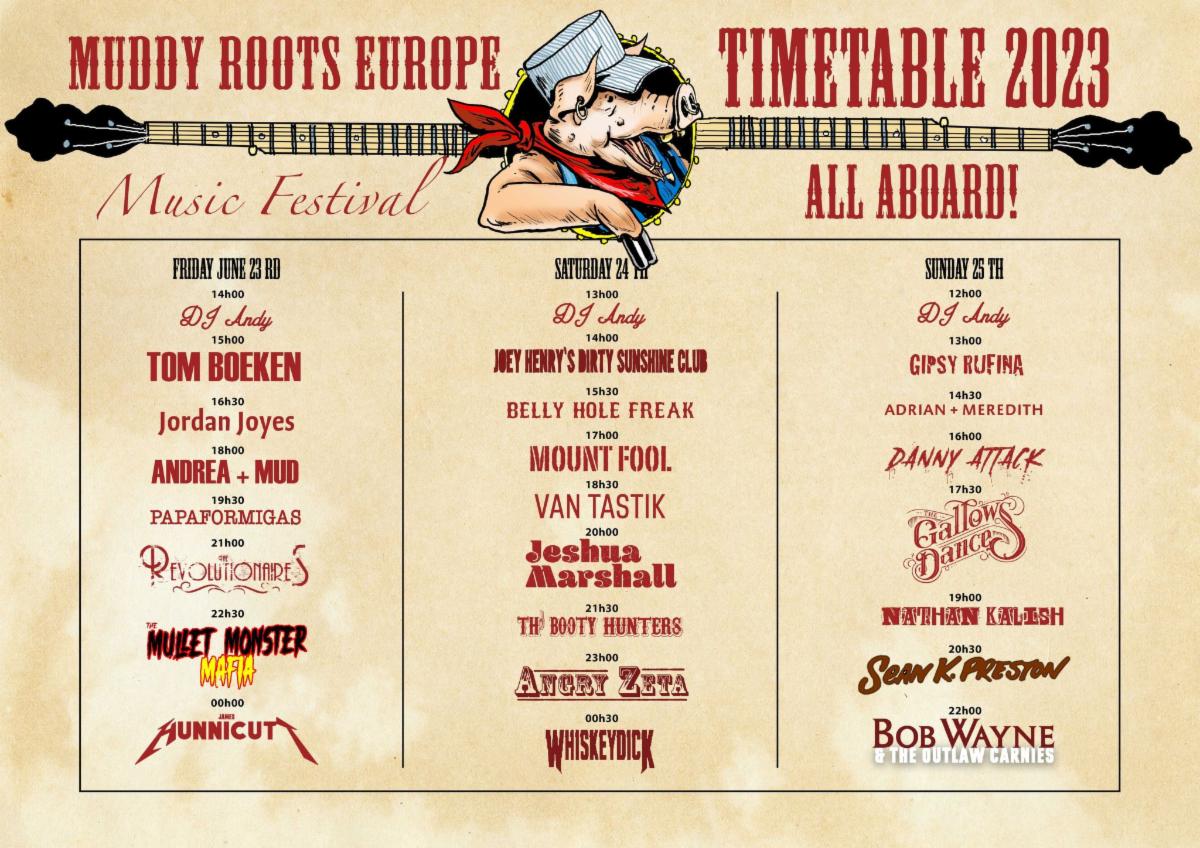 Some festivals are more spectacular than others. Muddy Roots Music Festival is a recurrent event in Cookeville, TN. The festival has a distant and less famous cousin, Muddy Roots Europe Festival. It's held in Waardamme, Belgium. The performing artists are an odd bunch. In fact, the only artists that stand out are James Hunnicut, Sean K. Preston and Bob Wayne. Of course, it can be hard to bring artists all the way from the US to Europe. So why not invite the crème de la crème of Europe instead? For instance: The Dad Horse Experience, Oldboy (of the Fens), Reverend Elvis, Salter Cane, Mr Plow, Vivita, Silas J. Dirge, The Dead Brothers, JB Nelson and Tenderloud. And furthermore, why not invite the European branch of Sons of Perdition to play an intimate gig? Or, why not try to arrange an one-time-only reunion with disbanded Viarosa, The Dirt or The Coffinshakers? Am I asking to much? Yes, probably. If you want something to happen, you must make it happen. I don't see myself as a festival arranger, but I can see the logo for the Ambassador Festival: a Burning Man for the gothic country genre. Is the festival concept dying? In January 2023 I wrote a blog post called "The most expensive concert ticket of all time", read more here (opens in a new window). It turns out that the arranger went bankrupt two weeks ago. Well, there is some poetic justice in the story. The arranger wrote an incoherent statement: explaining, claiming and blaiming. What happens now? Obviously, The Devil Makes Three will not make their debut in Sweden and the question is if they ever will. And what about the people who bought tickets to the spectable? I don't think that they are of any primary concern for the trustee. A priority claim is debt that is entitled to special treatment in the bankruptcy process and will get paid ahead of non-priority claims. The ticket holders of the ridiculously high-priced festival doesn't belong to the prioritized group.
 “What came first, the music or the misery? Did I listen to music because I was miserable? Or was I miserable because I listened to music? Do all those records turn you into a melancholy person? This quote from Nick Hornby's book "High Fidelity" describes the complex interplay between music and mindset. The quote continues: "People worry about kids playing with guns, and teenagers watching violent videos; we are scared that some sort of culture of violence will take them over. Nobody worries about kids listening to thousands - literally thousands - of songs about broken hearts and pain and misery and loss. The unhappiest people I know, romantically speaking, are the ones who like pop music the most; and I don't know whether pop music has caused this unhappiness, but I do know that they've been listening to the sad songs longer than they've been living the unhappy lives.” Sad songs have been the soundtrack of my life. I have been exposed to an unhealthy dose of miserable music. Probably more than most people can take. This may look like self-harm from the perspective of others, a type of flagellant-style suffering. And furthermore, if the above quote is true for pop music then it must be even more true when it comes to gothic country music, where the suffering is a bottomless pit. I don't take people who like "happy music" seriously. For me, this is a clear indication of a very limited emotional setup and range. But, there is a paradox. Sad song makes you happy, read more here (opens in a new window). It's both compatible and acceptable to walk down the street with a smile on your face humming a murder ballad.
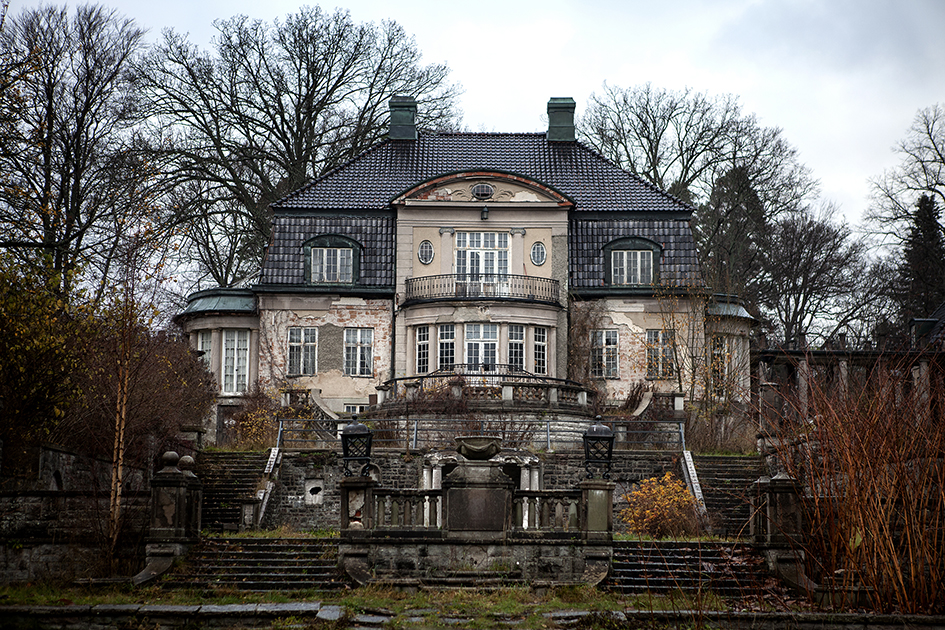 "How to sell a property with a squatter inside". This short headline caught my attention when it appeared in the news feed. I read with interest. Getting rid of a squatter is easier said than done. Squatters have rights too and may in some legal systems claim right over the property. This is known as adverse possession. In most legal systems the rightful property owner cannot remove the squatter without prior order from a court. There's a difference between trespassing and squatting. Trespassing is entering without the consent of the owner and squatting is moving into an abandoned or unused house. There are some do's and dont's; get legal representation, alert the relevant authorities, start the eviction process and stick to the manual. It's important that steps are taken in the right order. Don't take the law in your own hands. Squatting is uncommon in Sweden. Nevertheless, a squatting story hit the news in 2021 and a remarkable background story unfolded. We will start from the beginning. Banker Gunnar Kassman, Ivar Kreuger's closest man, had Villa Kassman rebuilt from an old stonehouse around 1910. The property lies on Storholmen, a small island just north of Stockholm, and can be reached by commuter boat line 80. I have been there myself. On the outside, looking in. Villa Kassman is an amazing castle-like building, 700 square meters and consists of 24 rooms divided into a main building and two wings, with garden and dams. There is fame and there is notoriety. Villa Kassman appeared in a Swedish documentary about Freedom Movement (Frihetsrörelsen). The beautiful property was used as a training camp for right-wing conspiracy theorists. They had found strength and comradeship in a male community and were bending their bodies and doing handstands, all in the name of the cause.
 The Kassman banking business went belly up in the beginning of 1920s. The property was converted into a boarding house. During WWII the Soviet Embassy rented the house. During this time the buildings, garden and dams fell into disrepair. The property was sold in 1949, but was not taken into possession. The buyer, a pharmacist, was namely pronounced deranged and the purchase did not go through. The house stood empty and fell deeper into disrepair. 1962 it was sold to a manufacturer who only used it as a summer house for over 30 years. In 1997 Villa Kassman was sold again. And finally, in 2021 it was sold to Tobias Appelö, a then 40-year old real estate developer. The price was 2,3 million dollars. And, here is when the story gets interesting. When the new owner came to take the property into possession he found a man in the house who refused to leave. It was Leif R. Carlsson, a former hockey player and "entrepreneur". He claimed that he had a verbal agreement with the seller, Nils Andersson (also a former hockey player and later coach). In 1997, the two men had bought the property together. Their goal was to make money of the property when Stockholm hosted the 2004 Olympic Game. However, Stockholm never got the games. The capital never stood a chance. No money were made. Allegedly, Nils Andersson paid for all costs, interest rates on loans as well as heating, water, sewage and waste collection. In 2005, Leif R. Carlsson was bought out by Nils Andersson. Leif R. Carlsson remained on the property. In 2011, the property was up for sale again, but never sold. Probably for its huge renovation needs in combination with being classified as cultural-historical irreplaceable.
 In 2016, the two entrepreneurs Leif R. Carlsson and Nils Andersson took initiative to a bold and daring project which was presented on a chaotic press conference with more questions than answers. A Swedish hockey team, Crowns, would be introduced in the KHL (Kontinental Hockey League, founded in 2008 with teams based in Russia, Belarus, Kazakhstan and China). According to Leif R. Carlsson the financing of 12 million dollars was already granted. There was only one tiny detail, an approval was required from the Swedish Ice Hockey Association - something the project did not get. The project is on ice (no pun intended) and the financing is gone (if it ever existed). Back to the legal dispute. The new owner Tobias Appelö applied for judicial assistance from the Enforcement Authority in May 2021, but it was rejected. In September, however, the Enforcement Authority got a green light to evict Leif R. Carlsson after a default judgment in the Stockholm district court. Leif R. Carlsson didn't show up in court. According to him, the summons to court letter disappeared after a burglary. The dog ate my homework. On October 19, 2021 Leif R. Carlsson was evicted. There were police officers, Enforcement Authority officials and a locksmith present. The latter changed the locks. Everything went smoothly. Leif R. Carlsson immediately appealed the eviction, but it was denied. Leif R. Carlsson had to pay $9 500 in legal costs. The hockey game was over. Well, not entirely over. The new owner had become tired of the process and actually contemplated to sell the property. But ultimately changed his mind. The plan is to restore the house to its former glory, which is good. The house is in a bad shape. Many things needs to be fixed; exterior, damp damage, restoration of wallpaper and the replacement of floors. The total renovation cost is estimated to 4 million dollars (almost twice the purchase price). However, the new owner seems to have missed the fact that the property is classified as cultural-historical irreplaceable or just took a chance. He sent a request for a new local plan to the environment and urban planning office in the muncipality. The plan was to build 10 rental cabins, ice cream stand, canoe rental, sauna and new boat facility. Adding to this, a school alternatively a padel tennis court. The local authorities quickly and bluntly said no.
 Tomorrow is World Goth Day. We are living in a world where there is a day for everything, for example Cinnamon Bun Day. A day for goths is against this background only fair and motivated. It's "a day where the goth scene gets to celebrate its own being, and an opportunity to make its presence known to the rest of the world." Amen to that. World Goth Day originated in the UK in 2009 from a smaller scale celebration of the gothic subculture. It celebrates many aspects, by fashion shows, art exhibitions and music performances. The gothic spectrum is broad and permissive from gothic rock to gothic country. With a benign interpretation, I'm an influencer within a narrow field. A distinct style of clothing and appearance is associated with goths. Some goths wear dark clothing and pale makeup. The history of goth can be traced back to 1764, when writer, art historian and politician among other things Horace Walpole published "The Castle of Otranto," with the subtitle "A Gothic Story". Gothic horror was regarded as a pleasing extension of romantic literature. It alludes to the romance of the darker aspects of life in many ways, built on the aesthetic of fear and haunting. People mistake goths for those who are obsessed with death, horror and all things morbid. Of course, this can be the case. But, a lot of non-goth-looking people have a soft spot for gothic litterature, art and music. My personal experience is that you can't tell from the outside what's going on in the inside. There are goths and there are goths. I don't look like The Cure's Robert Smith. I'm a preppy goth wearing small checkered shirts. And Oxfords and Brogues. Still goth.