Those Poor Bastards are back with a new album. "Howdy Creeps, We've finished a new record called "Black Tongue". This album is unadorned, unpolished and ugly. We've stripped everything back to the infected bone, and left the untreated wound to fester. The shackles of modern recording fidelity have been cast aside and the mystery of busted and broken music has emerged triumphant." As always, there's something for everyone. You can pre-order the album on limited edition vinyl (115 purple w/silver splatter, 100 gold swirl, 100 red, 11 transition colors, 8 black), cassette (50 copies) and CD. What can we expect? Those Poor Bastards are known for good consistent quality, but their last three albums have been a hit and miss. From the product declaration on Bandcamp: "Black Tongue is Those Poor Bastards at their most scorched-earth, mud-caked, and downright broken. Lonesome Wyatt and The Minister peel back every last layer of polish until only the rust and rot remain. The instrumentation is sparse and uneasy. It crackles with warped tape hiss, creaking boards, and the ghost-hum of bad wiring. The songs feel unearthed rather than written, like cursed field recordings found in a burned-out shack at the edge of nowhere. Things haven't sounded this bad in years." If the album is half as good as the copywriting then we have something to look forward to.
Emmylou Harris is a legendary country-rock and Americana artist. Thirty years ago she moved away from her traditional acoustic sound and collaborated with producer Daniel Lanois and engineer Mark Howard. The result (Wrecking Ball) received almost universal acclaim. The album contains twelve songs, placed in perfect order. The album opens with “Where Will I Be,” written by Lanois, where Harris asks herself: "Oh where oh where will I be / Oh where oh when that trumpets sounds". An obvious reference to the Bible. The drums and guitars are exquisite. The second song is "Goodbye" written by Steve Earle. Usually, Steve Earle says nothing to me about my life, but I must give him credit for this dark and doom-laden song. At least, for Harris interpretation of it. The third song is "All My Tears", written by Julie Miller. Harris version is more powerful and dynamic than the original. "It don't matter / Where you bury me / I'll be home and I'll be free / It don't matter where I lay / All my tears be washed away". The fourth song is "Wrecking Ball" written by Neil Young. The grumpy old man sings in the chorus. Perfect arrangement with a lot of emotions and nuances. The fifth song is "Goin' Back to Harlan" written by Anna McGarrigle. Harris version supersedes the original, which is quite an achievement considering the McGarrigle quality. The sixth song is "Deeper Well" written by David Olney and Daniel Lanois. This is one of the darkest and heaviest songs on the album. "Well, I did it for kicks and I did it for hate / I did it for lust and I did it for faith / Did it for need and I did it for love / Addiction stayed on tight like a glove". The seventh song is "Every Grain of Sand", written by Bob Dylan from "Shot of Love" whis is considered to be Dylan's last of a trilogy of Christian albums (Slow Train Coming, Saved and Shot of Love). Great interpretation, anyway. The eight song is "Sweet Old World" written by Lucinda Williams. As in the Miller and McGarrigle case above, Harris version supersedes the original. The backing vocals are provided by Neil Young, who also contributes harmonica to the track. The ninth song is "May This Be Love" written by Jimi Hendrix. An odd choice maybe, but it actually works. The tenth song is "Orphan Girl" written by Gillian Welch. This version is as good as the original. The eleventh song is "Blackhawk" written by Daniel Lanois. Good song, but in comparison with the extreme high quality songs on the album this is one of the weakest songs. And finally, the twelfth song is "Waltz Across Texas Tonight" written by Emmylou Harris and Rodney Crowell. And then it's over. "Wrecking Ball" is one of the best examples of creative producer meets brilliant musician. The dark gothic streak is what it makes it stand out. "Wrecking Ball" showcases perfection in every detail. The soundscape is brilliant. The site The Audiophile Man wrote: "The album displays lots of ambient detail along with a whole heap of memorable low end, featuring a clear, bottom-heavy portrayal of the toms and bass drum. Apparently that lot was recorded using ribbon mikes which might explain a lot."
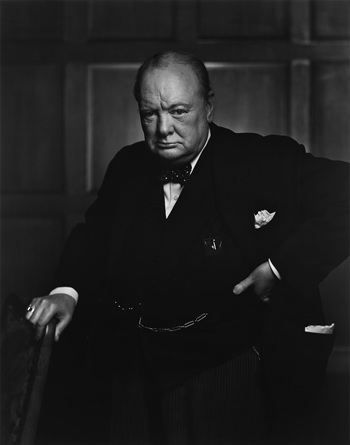
There are speeches and there are speeches. Some goes in one ear and out the other, while others stand the test of time. A few speeches not only stand the test of time, they also made a mark in history. "We shall fight on the beaches" was a famous speech delivered by the British Prime Minister Winston Churchill to the House of Commons of the Parliament of the United Kingdom on 4 June 1940. The speech is widely held to be one of the finest oratorical moments of the war and of Churchill's career. The times were dire. Churchill had to balance the threats of a possible invasion attempt, without casting any doubt on eventual victory. He had to reiterate a policy and an aim unchanged from his speech from 13 May 1940, in which he had declared the goal of "victory, however long and hard the road may be". Churchill had a way with words. Many regard the lines "We shall fight on the beaches, we shall fight on the landing grounds, we shall fight in the fields and in the streets, we shall fight in the hills; we shall never surrender" as his finest hour. However, there's another brilliant line in the speech when he speaks about defending their island home, to ride out the storm of war, and to outlive the menace of tyranny "if necessary for years, if necessary alone". Delivered with perfect timing and modulation. Today, I have been running this website for exactly 12 years. No comparison intended, but I will also go on. I have posted an anniversary blog post every year. Now, it's time to summarize the last year. The visitor counter indicates 354 461.
Assessment
Executive summary: The website has operated successfully for the last twelve years. New content has been added with regularity and to a sufficient degree without any deterioration in quality. The website is in need of a minor review, primarly with the intent on updating information on existing pages. A plan for this has been developed and implemented. Minor disruptancies in the operation of the website have occured, but this haven't affected production or quality. The coming year we will see a strong focus on content and the management and development of the site.
Visitor statistics
The website didn't have many visits in the beginning. Then the web indexing and Google algorithms began to kick in. The average number of days to reach another 10 000 visitors has decreased over time. Despite changes in Google algorithms the website continues to attract visitors and the last year has been a record year. More than 49 000 visitors during the last year. All time high.
Department statistics
I wrote zero new articles last year. This says more about the state of the genre, than about me. As I have stated before, new articles have no intrisic value. I don't want to lower my standards. I have a list of 4-5 bands waiting to be included in my prestigious article series. My aim is to write at least one new article the upcoming year. Moreover, I listed zero new artists in the table. I created zero new lists. I wrote 53 blog entries, which is once a week. However, "blogging is not writing, it's graffiti with punctuation" as someone have pointed out.
Most visited pages
The five following pages are the most visited. The start page "Home" is and have always been the most visited page. Not very surprising. The second page "Artists" is a simple list with links to Discogs and articles. Still, very popular. The third page is the list "10 essential gothic country albums", which comprises a canon of must-have gothic country albums. The "10 best version of Wayfaring Stranger" list has become quite popular in recent years and is placed as number four. Review of "Fossils" (Sons of Perdition collaborative album) is placed as number five. The order has shifted over time. The Sons of Perdition article page belonged to the five most visited pages for many years. It's now placed as number ten.
Flaws
The website has been up and running twenty-four seven. I have done some maintenance, but still has a few things to fix. If you stumble over any obsolete or incorrect information or any dead links don't hesitate to contact me and I will fix it. I take some pride in that the website is updated.
Reflections
Nothing to report under this section.
Future
I will go on untiringly within the limits of family, work and other duties. That is, "if necessary for years, if necessary alone".

I struggled hard to watch film director Jonathan Stiasny's documentary "David Bowie: The Final Act". I failed utterly the first time. I barely managed the second time. The raw film material isn't bad, on the contrary. The original footage is brilliant, hearing Bowie speak about his music is always a pleasure and watching Johan Renck's official music video for "Lazarus" is sad and gripping. David Bowie died shortly after "Blackstar" was released. However, the documentary is a disaster. There are some do's and dont's in script writing. You don't need to include a real astronaut (Chris Hadfield) just because "Life on Mars" is lingering in the background. It's too obvious. You don't need to include drum and bass artist Goldie to be perceived as "modern". It's too anxious. You don't need to give enormous space to guitarist Earl Slick, when he hasn't much of importance to say. It's too unimaginative. I could go on, but I will stop there. This particular documentary adds little or nothing to what we already know about David Bowie. Music documentaries in general are all cast in the same mold. A narrator, people telling their rationalized and fabricated stories, L cuts and J cuts, archive material mixed with genre footage and, last but not least, a standardized narrative technique. The scene settings are heavily templated and ruminated. Either shot in an expensive recording studio or in a tacky home. The homes are terrible: vulgar furniture, black chandeliers, a grand piano to prop up their mortal remains, hideous carpets and vomit-inducing art. But, it's not the repulsive interior design that upsets me. It's the format. I can't stand it.
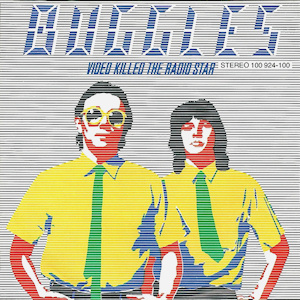
Some songs are distinct time markers. This could have severe consequences, as we will see in this blog post. In the 1980s, just music wasn't enough to please the masses. The music had to be embodied in a video to get attention. MTV was launched in 1981 and quickly became a defining cultural force of the 1980s with 24-hour music videos. It was a terrible time for aesthetes. The presenters on the channel were called "VJ" as opposed to "DJ". The music video for "Video Killed the Radio Star" is notable as the first video ever played on MTV. Some muisc videos were arty-farty. Some were inexplicable. Some were awful. Some left an imprint. Here is one image from the beginning of the 1980s that is burnt into my brain. Me and a couple of guys were making casual conversation about music. Then one guy said: "I lost my virginity to Video Killed the Radio Star". This unsolicited information was contradictory to his previous information in the matter according to which he had lost his virginity way back. He tried to save the situation by saying that he had confused his lost-virginity-song with "Video Killed the Radio Star", but it was too late for any rescue attempt. Thinking back, what an absolute terrible song to lose your virginity to. No class act. On the other hand, in those days you could lose your virginity behind a gas station. Back to the arrival of videos. In the 1980s, video really killed the radio star. If a band or an artist didn't make a video, this stood out. Some music video producers/directors got filthy rich. Nothing lasts forever. Even the longest, the mos glittering reign must come to an end someday. The MTV channel was quietly shut down in December 2025. Before that, the channel experienced a languishing existence for years with reality series of the trashier kind. Let's agree upon that streaming killed the videos. Structural change and transition are common in the music industry. Where there is transition there are myths. Here is a myth. CD replaced vinyl in the 1980s. According to vinyl conspiracy theorists it was not the cd superiority that killed vinyl. No, it was a stab in the back. Allegedly, the big record companies didn't allow overstocked or unsold vinyls to be returned and, at the same time, raised the prices on vinyls. The vinyl format was squeezed to death. That's why it only took 18 months to kill vinyl in 1984. In a twist of fate, vinyl later returned from the dead and killed cd (with good help from streaming). The cd format was squeezed to death. The big record companies raised the prices on vinyls at the same time. This is capitalism in its purest form.